Tile and Grout Color Pairings
By the JDI Construction teamReviewed by Arthur Kulchitskiy, Project Consultant, and Denise Lacquement, Designer (bathroom specialist)Updated October 20265 min read
Matching grout makes tile read as one calm surface and hides small layout flaws; contrasting grout outlines every tile and turns the pattern into the main feature. On bathroom floors, a grout slightly darker than the tile hides wear; on walls, light grout is easier to keep looking clean. Choose grout with the actual tile in hand, and remember that grout is not waterproof, whatever its color.
Grout covers a small part of a tiled wall but changes how the whole wall looks. The same white subway tile with white grout reads as a soft, plain surface; with charcoal grout it becomes a graphic grid. In a bathroom, grout color also decides how quickly the floor looks dirty and how much scrubbing the shower needs. This page is about choosing the color. The types of grout, joint widths and sealing are on grout for bathrooms.
Matching, blending or contrasting
| Approach | What you see | Good for | Trade-off |
|---|---|---|---|
| Match | Grout the same color as the tile; tile reads as one surface | Small bathrooms, large-format tile, stone looks, busy tile shapes, calm spa-like rooms | Hides the pattern; light matching grout on floors shows dirt |
| Blend (one shade off) | Grout a little lighter or darker than the tile; joints show softly | Most bathrooms; floors where a slightly darker grout hides wear | Few; the safe choice when unsure |
| Contrast | Grout clearly lighter or darker than the tile; every joint outlined | Simple tile shapes where the pattern is the point: subway, herringbone, hexagon, stacked | Shows every uneven joint, lippage or cut; the layout has to be precise |
Grout on floors and walls
Bathroom floors
Floor grout sits below the tile surface, collects whatever is tracked in and gets wet at every shower exit. Bright white floor grout looks crisp at the final walkthrough and rarely stays that way. A mid-tone grout, or one a shade darker than the tile, ages more gracefully. If the floor tile itself is light, a warm light gray or a soft beige grout keeps the light look without showing every footprint.
Shower walls
Walls get splashes but no foot traffic, so light grout stays cleaner. The risk on shower walls is soap film and mildew in the joints near the floor and at inside corners, where water lingers. Good ventilation does more for that than grout color; the EPA's first point on mold is that the key to mold control is moisture control.
Shower floors
Small mosaics are common on shower floors and have far more grout per square foot than wall tile. The grout color essentially becomes the floor color. A slightly darker grout than on the walls is a common, practical choice.
Grout with colored tile
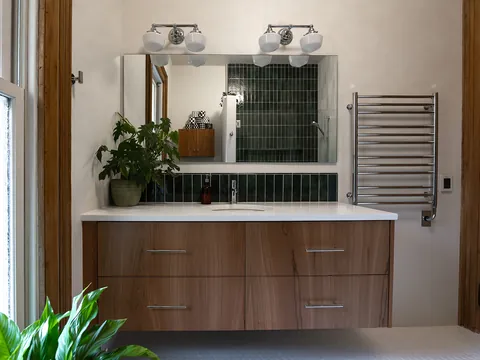
- Green, blue and other colored tile. White grout outlines each tile and makes the color feel lighter and more graphic. A grout matched to the tile lets the color read as one rich surface. A neutral gray in between sits well with most mid-tone colors.
- Dark and black tile. White grout gives a strong grid. Charcoal or black grout makes a calm, solid dark wall, though it shows the white mineral marks and soap film that dry on dark surfaces.
- Patterned and encaustic-look tile. Match the grout to the background color of the pattern so the pattern stays the focus.
- Two tiles meeting. Where a field tile meets an accent band or a different floor tile, choose one grout color that works with both, or change the grout exactly at the tile change, never mid-row.
Handmade, zellige and textured tile
Handmade tile has uneven edges and varied glaze, and the grout fills irregular gaps between pieces. A grout that matches the lightest tone in the tile lets the variation show and softens the edges. A contrasting grout makes the irregular edges very obvious, which some people want and others find untidy. Textured tile also holds grout haze in its surface, so ask the installer to test on a spare piece first. More on these tiles is on zellige and handmade tile, and you can see handmade tile in a finished room in our arched zellige wet room and designer powder bath.
Grout with natural stone
Marble, travertine and limestone are porous, and the pigment in a dark grout can bleed into the edges of a light stone. Stone is generally sealed before grouting for this reason, and the Natural Stone Institute recommends a sealer that resists both water-based and oil-based stains. Marble and travertine also etch on contact with acids, so grout cleaners and haze removers have to be safe for stone. A grout matched to the stone's background color is the lowest-risk choice. More on stone in bathrooms is on marble, travertine and natural stone.
Keeping light grout clean
- Choose the grout type with color in mind. Cement grouts are covered by ANSI A118.6 (standard) and A118.7 (high performance); epoxy grout by ANSI A118.3; pre-mixed grouts by ANSI A118.19. Epoxy and many pre-mixed grouts resist staining better than plain cement grout, which helps light colors stay light. Ask what the grout maker says about sealing.
- Seal cement grout if the maker recommends it, and keep up with the schedule they give.
- Squeegee and ventilate. Wiping the walls after a shower and running the fan removes the moisture that lets mildew grow in the joints.
- Use mild cleaners. Harsh acids can etch cement grout and damage stone. Check what the grout and tile makers recommend.
How to decide
- Get the actual tile, not a photo, and the grout maker's color samples (cured samples, not the printed card).
- Ask for a small sample board with two or three grout colors on the real tile.
- Look at the board on the floor and upright on the wall, in your bathroom's light.
- Decide floor and wall grout together, and confirm the color in writing before grouting starts.
For how grout fits into the bathroom's wider palette, see bathroom color schemes. JDI confirms tile, grout and layout with you during design, before tile is ordered; our Vancouver bathroom remodeling page explains how a project starts.
Common questions
Does grout color change after it is installed?
Yes, somewhat. Cement grout usually dries lighter than it looks wet, and it can dry slightly uneven in color depending on how it was mixed and cleaned. Over time, light grout on floors darkens with dirt and traffic. Ask your installer to show you a cured sample board before grouting the whole room.
Can I change grout color later?
Grout colorants and stains can change the color of sound cement grout, and grout can be raked out and replaced, but both are slow, detailed work. It is far easier to choose the right color the first time with a sample of the real tile.
Should shower floor grout match the walls?
It often does for a seamless look, but the shower floor takes standing water, soap and foot traffic, so many people choose a slightly darker grout on the floor than on the walls. Small mosaics on shower floors have a lot of grout, so the grout color decides how the floor looks.
Will dark grout stain light marble?
It can. Natural stone such as marble is porous, and the pigment in a dark grout can bleed into the stone's edges. Stone is usually sealed before grouting, and the installer should test the grout on a spare piece first. Many people choose a light grout with marble for this reason.
Is epoxy grout available in the same colors?
Epoxy grouts come in a wide color range, and their color tends to stay more consistent than cement grout because they resist staining. They are harder to install neatly, especially on textured or handmade tile. The grout guide compares the types.
- TCNA: ANSI standards for tile installation (grout standards A118.3, A118.6, A118.7, A118.19)
- TCNA: Space Between, a close look at grout standards
- Natural Stone Institute: Sealing stone
- EPA: A Brief Guide to Mold, Moisture and Your Home
Checked October 2026. Rules, fees and programs change; confirm the current requirement with the agency before you rely on it.
Keep going
- JDI ConstructionBathroom remodeling in Vancouver, WAOur bathroom remodeling service, recent projects and what to expect.
- Exploring · Color and style guidesBathroom Fixture Finishes: Chrome, Nickel, Brass and BlackChrome, nickel, brass, bronze and matte black bathroom finishes compared: water spots, cleaning, mixing metals and matching across product lines.
- Exploring · Color and style guidesBathroom Styles: Modern, Traditional, Transitional, Mid-Century and SpaWhat defines modern, traditional, transitional, mid-century and spa bathrooms in tile, vanity, fixtures and lighting, and how to match a style to your home.
- Exploring · Color and style guidesCreating a Spa Bathroom at HomeHow to create a spa bathroom at home: calm materials, soft light, heated floors, a quiet fan, steam, a soaking tub, hidden storage and which features pay off.