Zellige, Handmade and Glazed Accent Tile
By the JDI Construction teamReviewed by Arthur Kulchitskiy, Project Consultant, and Denise Lacquement, Designer (bathroom specialist)Updated October 20265 min read
Zellige and other handmade tiles are uneven by design: varied color, wavy faces and chipped edges that catch light. They suit shower walls, vanity walls and niches, not floors. Expect to blend boxes, accept irregular joints and test sealing and grout on spare pieces. If you want a perfectly flat, uniform wall, choose a machine-made glazed tile with a handmade look instead.
Handmade tile is the opposite of large-format porcelain. Instead of one smooth surface, you get a wall of small pieces that each catch light differently: glossy, uneven, slightly varied in color, with soft or chipped edges. Zellige is the most familiar example, but the same questions apply to other handmade and glazed accent tile. This page covers what it looks like installed, how to live with it, and where it belongs in a bathroom.
What zellige actually is
Zellige is a traditional glazed clay tile, formed and cut largely by hand. That process is the point. No two pieces are the same thickness, the faces are slightly wavy, the edges are irregular, and the glaze pools and thins. When light hits a zellige wall, it scatters across thousands of small facets. It is why people love it, and why it surprises people who expected a uniform surface.
Other handmade and artisan tiles share some of that character in milder forms: hand-pressed terracotta, hand-glazed ceramic, and decorative glazed tiles with crackle finishes. Machine-made "zellige look" tile copies the color variation and glossy glaze on a flat, consistent body. It is a fair choice, and it installs like ordinary ceramic.
| Traditional zellige | Other handmade glazed tile | Machine-made handmade look | Glass tile | |
|---|---|---|---|---|
| Color variation | Very high | Moderate to high | Controlled | Low to moderate |
| Surface | Wavy, uneven thickness | Slightly uneven | Flat | Flat |
| Edges | Irregular, chipped by nature | Soft or irregular | Clean | Clean; sharp when cut |
| Floors | No | Only if rated | Only if rated | No |
| Shower walls | Yes, with sealing as the maker advises | Usually yes | Yes | Yes |
| Installation difficulty | Highest | Higher | Standard | Higher |
| Relative cost | Higher to highest | Mid to higher | Lower to mid | Mid to higher |
What to expect once it is on the wall
- Uneven faces. Neighboring tiles sit at slightly different heights. That is not lippage in the usual sense; it is the product. If you run a hand across the wall, you will feel it.
- Varied joints. Because pieces vary in size, joints vary too. Many installers set zellige very tight, almost butted, and let the grout fill the irregular gaps.
- Chips. Edges arrive chipped, and some break during cutting. Makers expect a share of pieces to be set aside, so order extra.
- Crazing. Fine cracks in the glaze are common in handmade tile. They can darken when wet in a shower and dry out again.
- Color shifts. One box can run lighter or darker than the next. Without blending, a wall shows stripes or patches.
Sealing and grout
Handmade tile is a clay body under a glaze, and that body is porous. At every chipped edge and through crazed glaze, the clay can take in water and grout pigment. That is why many makers recommend sealing zellige before grouting, so grout does not stain the exposed clay, and again after. The right sealer and schedule come from the tile maker, not from a general rule.
Always test on spare pieces first. Seal a few, grout them with your chosen color, clean them the way the installer will, and let them dry. You will see whether the grout haze comes off, whether the edges darken, and whether the color you picked still looks right against the glaze.
Grout choice affects the look more than with flat tile, because the joints are irregular. A grout close to the tile's lighter tones softens the variation; a contrasting grout outlines every piece. Cement, epoxy and pre-mixed grouts are compared in grout and sealing. Epoxy can be hard to clean off a textured, uneven glaze, so test it before committing.
Where to use handmade tile
- Shower walls. A common and good use, as long as the waterproofing behind it is right. The tile is the finish, not the protection; see waterproofing explained.
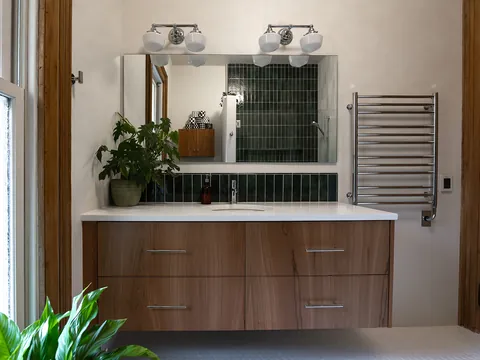
- A vanity wall or behind the mirror. High impact, low risk, and a good way to use an expensive tile on a small area.
- Niches. Lining a niche in zellige while the rest of the shower is plain is an affordable way to add character. Plan the niche size to the tile so you are not cutting slivers; see shower niches and benches.
- Wainscot. Handmade tile to chair-rail height protects the wall and adds texture. Wall finish choices above it are on bathroom walls, paint and wainscoting.
- Not floors or shower floors. Use porcelain or stone there.
Glass tile behaves differently from both zellige and ceramic. It is impervious and wipes clean, but it is cut with special blades, needs a mortar made for glass so the setting bed does not show through, and its cut edges need finishing. It is a wall material.
Lighting changes everything
Handmade tile looks richest with light moving across it. A window beside the shower or a wall-wash light shows the glaze depth. Flat, overhead light makes it look duller. In a Pacific Northwest bathroom with soft daylight, plan the lighting with the tile; see bathroom lighting.
Who should choose handmade tile
- Choose zellige if you want texture and movement, like a surface that looks crafted, and are fine with irregularity and some upkeep.
- Choose a handmade-look ceramic if you want the color and gloss with flat faces, easier cleaning and a lower installed cost.
- Choose a mix: a plain field tile with handmade tile on one feature wall or in the niche.
- Skip it if you want a uniform wall, a fast installation, or tile that never shows a chip.
What to check before you buy
- Where the maker allows the tile: wall only, wet walls, floors.
- The maker's sealing instructions, before and after grouting.
- How much extra the maker recommends for chipped and unusable pieces, and the delivery lead time.
- Photos of the product installed, not just loose samples, ideally in a shower.
- That your installer has set handmade tile before and plans to blend boxes.
- A test board with your grout and sealer.
- Trim: whether the line includes edge pieces or you will need metal profiles.
Want to see how handmade and accent tile looks in finished rooms? Browse our bathroom remodeling projects, then talk it through with JDI's designer during a free consultation.
Common questions
Can zellige go on a bathroom floor?
Generally no. Traditional zellige is soft, uneven and not made for foot traffic or wet floors. A few makers offer floor-rated handmade tile, but check for a floor rating and wet slip classification before considering it. Use a porcelain or stone floor and keep the handmade tile on the walls.
Do I have to seal zellige?
It depends on the tile. Many makers recommend sealing because the clay at chipped edges and through crazed glaze can absorb water and grout pigment. Follow the maker's instructions, and test the sealer and grout on a spare piece first.
Why does my handmade tile have cracks in the glaze?
Fine crackle in the glaze, called crazing, is common in handmade and some glazed decorative tile. It is often part of the look. It can absorb water and darken in a shower, which is one reason makers recommend sealing. Ask the maker whether crazing is expected for that product.
Is glass tile good for a shower?
Glass tile works well on shower walls and is easy to clean. It is not for floors. Clear and translucent glass shows the mortar behind it, so it needs a mortar made for glass tile and a careful setter. Edges are sharp when cut, so trim and finished edges matter.
- Tile Council of North America: ANSI standards list (A137.1 ceramic tile, A118 grouts and mortars)
- Tile Council of North America: Dynamic coefficient of friction FAQ (ANSI A326.3)
- Tile Council of North America: Shower FAQ (membrane behind the tile)
Checked October 2026. Rules, fees and programs change; confirm the current requirement with the agency before you rely on it.
Keep going
- JDI ConstructionBathroom projectsBefore-and-after bathrooms we have completed around Vancouver and Portland.
- Exploring · Tile, floors and walls in depthBathroom Tile Patterns: Stacked, Offset, Herringbone and MoreBathroom tile patterns compared: stacked, offset, herringbone, chevron, basketweave and hex, the 33 percent offset rule and planning around niches.
- Planning · Tile, floors and walls in depthGrout for Bathrooms: Cement, Urethane and EpoxyBathroom grout compared: standard and high-performance cement, epoxy, pre-mixed and urethane, joint widths, sealing, mildew in damp Vancouver and color.
- Exploring · Tile, floors and walls in depthBathroom Flooring Options: Tile, LVP, Sheet Vinyl and WoodBathroom flooring compared: tile, stone, luxury vinyl plank, sheet vinyl and wood. Water tolerance, slip, comfort, subfloor needs and old vinyl cautions.