Should You Keep a Bathtub? Tub vs Shower for Your Home
By the JDI Construction teamReviewed by Arthur Kulchitskiy, Project Consultant, and Denise Lacquement, Designer (bathroom specialist)Updated October 20265 min read
Keep a tub if you bathe young children, wash a dog, enjoy soaking, or it is the only tub in the house and you may sell within a few years. Switch to a walk-in shower if nobody bathes, stepping over the tub wall is getting harder, or you want a larger shower. If a primary bath gets a shower only, keep a tub in another bathroom.
Whether to keep a bathtub is one of the first decisions in a bathroom remodel, because it changes the plumbing, the waterproofing, the glass and the layout. There is no right answer for every house. It depends on who uses the bathroom now, who might use it next, how many other tubs the house has and how the room is shaped. This page walks through the decision.
Start with how the bathroom is used
Ask who takes baths in this room, and how often. The answer usually settles the question.
- Young children. Bathing small children is far easier in a tub than a shower. If the house has young children or grandchildren who visit often, keep at least one tub.
- Pets. A tub with a handheld shower is the practical place to wash a dog.
- Soaking. If someone takes regular baths for comfort or sore muscles, a good soaking tub is worth the space. Our page on soaking, whirlpool and air tubs covers the options.
- Mobility. Stepping over a tub wall is the hardest part of bathing for many older adults and anyone recovering from surgery. A walk-in or curbless shower with a seat and grab bars removes that step. See aging-in-place bathrooms.
- Nobody bathes. If the tub is used only as a shower and the curtain is the main annoyance, a walk-in shower will likely serve you better.
Your options compared
| Option | Best for | Trade-offs | Relative cost to build |
|---|---|---|---|
| Tub-shower combo (alcove) | Hall and kids' baths; any bath that must do both jobs in one footprint | Step over the tub wall; smaller standing area | Lower |
| Walk-in shower only | Adults who shower; accessibility; small rooms | No tub in this room | Mid; a conversion adds drain, valve and glass work |
| Separate tub and shower | Primary baths with room for both | Takes the most floor space | Higher |
| Tub inside a wet room | Primary baths that want a tub and a large shower without two enclosures | Full-room waterproofing; careful drainage and ventilation | Higher to highest |
| Curbless shower | Aging in place, wheelchair access, a seamless look | Floor framing or slab work to recess the shower | Higher |
Resale when the house has one tub
We do not have Vancouver-area data on how removing a tub affects sale price, and we are not aware of any published study that measures it. The practical reasoning is this:
- A house with no tub at all may not suit buyers with young children. That can mean fewer interested buyers, not necessarily a lower price.
- Removing a tub in a second or primary bathroom, while a tub remains elsewhere, carries much less of that risk.
- If you are staying many years, your own use matters more than a buyer you have not met.
If the tub in question is the last one in the house and a sale is likely within a few years, talk to a local real estate agent who knows your neighborhood before you decide. Our page on whether a bathroom remodel adds value covers the published resale figures for bathroom projects in the Pacific region.
The tub-shower combo, done well
For a shared hall bath, a tub-shower combo is often the right choice, and a few details make it work much better than the one you may be replacing.
- A pressure-balancing or thermostatic valve that keeps the temperature steady.
- A handheld shower on a slide bar, for rinsing children, pets and the tub itself.
- A fixed glass panel or a hinged screen instead of a curtain, if the household is careful about splashes; a curtain is still the most forgiving with small children. Glass at a tub must be marked safety glazing.
- A niche in an interior wall for bottles, and a grab bar with blocking behind it.
- A lower tub wall, if the model range offers one, to make stepping in easier.
Our page on hall and kids' bathrooms covers the rest of that room.
Converting a tub to a shower
A conversion is more than removing the tub. The drain usually changes size and position, the valve and showerhead move up, the floor needs a waterproofed shower pan sloped to the drain, and glass is templated after tile. The space a standard alcove tub leaves is often enough for a comfortable walk-in shower, and a curbless version needs the floor recessed. The full picture is on our tub-to-shower conversion page, and our blog post on bathtub to shower conversions shows the steps.
A tub inside a wet room
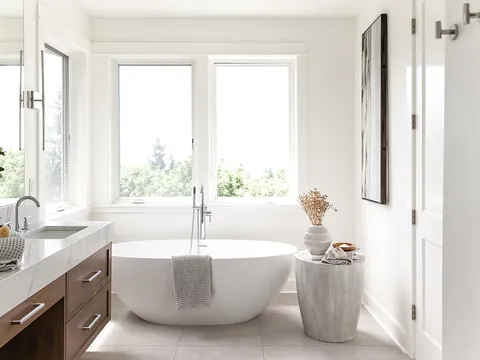
When a primary bath has room for both a tub and a shower but not for a separate enclosure around each, a wet room puts a freestanding tub inside the waterproofed shower zone behind one glass panel. You can step from shower to bath without worrying about splashing, and the tub can be rinsed with the handheld. The room needs full waterproofing, a properly sloped floor and strong ventilation. See wet rooms.
Cost in relative terms
- Replacing a tub with a tub in the same spot is usually the simplest, since the drain and valve stay roughly where they are.
- Converting to a walk-in shower moves the drain and valve and adds a pan and glass. It typically costs more than a like-for-like tub replacement, not less.
- Adding a freestanding tub to a primary bath is an add-on in JDI's published calculator with a planning range of $2,500-$6,500, on top of the base bathroom range. See bathroom remodel cost in Vancouver, WA.
- Curbless showers and wet rooms sit at the higher end, because of the floor and waterproofing work.
Who should choose which
- Families with young children: keep a tub, usually as a tub-shower combo in the hall bath.
- Couples or adults who only shower: a walk-in shower in the primary bath, with a tub kept elsewhere if the house has one.
- Planning to age in place: a curbless or low-threshold shower with a seat, and grab bars in both shower and any remaining tub.
- Soakers with space: a separate tub and shower, or a tub inside a wet room.
- Selling soon, with one tub in the house: keep it, or ask a local agent first.
JDI Construction does whole bathroom remodels and also shower remodels and tub-to-shower conversions. At a free in-home consultation we can sketch both options for your room so you can compare. See shower remodeling in Vancouver, WA, and check the current walk-in shower and tub offer.
Common questions
Does removing the only bathtub hurt resale?
It can narrow the pool of buyers, especially families with young children, though no published data measures the effect in the Vancouver area. If the tub you are removing is the only one in the house and you expect to sell within a few years, ask a local real estate agent how homes like yours sell before you decide.
Can I put a tub back later if I convert to a shower?
Yes, but it is a second remodel: the drain, valve, waterproofing and wall finish all change again. If you think you may want a tub later, for a child on the way or a future sale, it is usually better to plan both now, or keep the tub in another bathroom.
Is a tub-shower combo a good compromise?
For a hall or kids' bath, it is often the right answer. It gives a tub and a shower in the space of one. The compromises are the step over the tub wall and a smaller standing area than a walk-in shower.
Is converting a tub to a shower cheaper than replacing the tub?
Not usually. A conversion changes the drain, the valve height, the waterproofing and the floor, and adds glass. Replacing a tub in the same spot, with new walls, involves fewer changes. Ask for both options priced side by side on the same visit.
What about a walk-in tub with a door?
A walk-in tub has a sealed door so you can step in without climbing over the wall. You have to sit inside while it fills and drains, and the door seal needs care. For many people with mobility concerns, a curbless shower with a seat and grab bars is easier to use, but it depends on the person.
Keep going
- JDI ConstructionShower remodeling in Vancouver, WAWalk-in, curbless and tub-to-shower conversions by our design-build team.
- Exploring · Bathtubs in depthBathtub Types: Alcove, Drop-In, Undermount, Freestanding and CornerAlcove, drop-in, undermount, freestanding and corner bathtubs compared: the space each needs, how it is installed, cleaning and relative cost.
- Exploring · Bathtubs in depthFreestanding Tubs: Space, Floor Loads and Faucet ChoicesPlanning a freestanding tub: space around it, floor, wall or deck faucets, drain location, floor framing for the filled weight and JDI's add-on range.
- Exploring · Bathtubs in depthBathtub Materials: Acrylic, Enameled Steel, Cast Iron and Stone ResinBathtub materials compared: acrylic, fiberglass, enameled steel, enameled cast iron, stone resin and cultured marble on weight, warmth, durability and repair.