
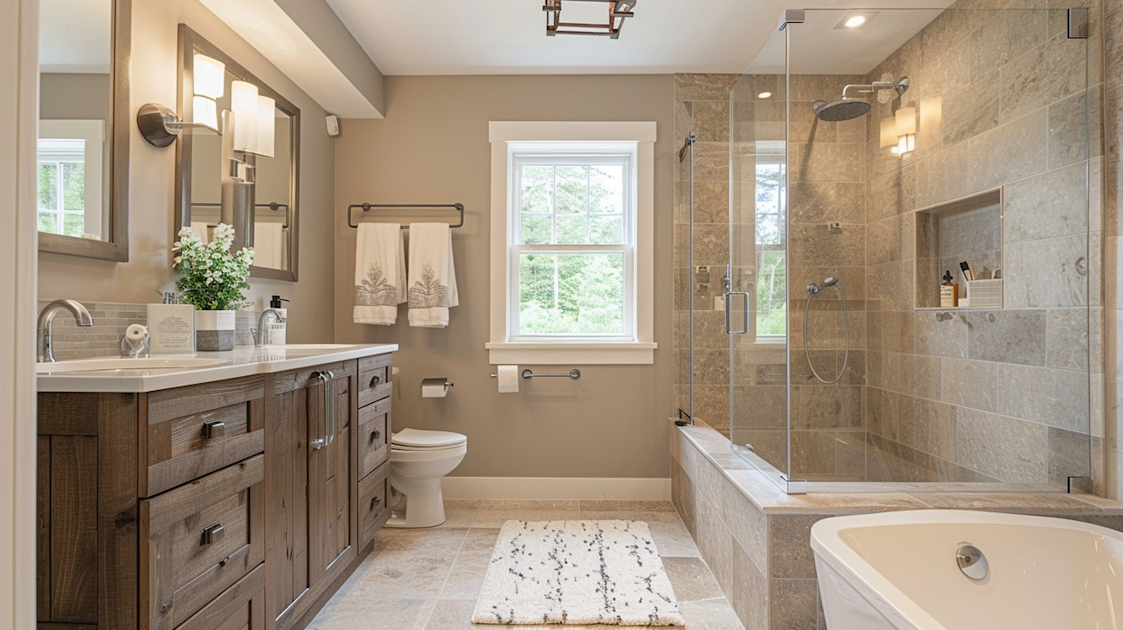


Creating the perfect bathroom layout can transform your daily routine into a luxurious experience. Whether you're designing a new bathroom or remodeling an existing one, understanding various bathroom layouts is crucial. This guide explores everything from small bathroom designs to master en-suites, ensuring your space is both functional and aesthetically pleasing.
Understanding Bathroom Layouts
When it comes to bathroom layouts, the possibilities are endless. However, the best layout for your bathroom will depend on various factors—size, shape, personal preferences, and budget. Let's dive into the most common types of bathroom layouts.
Standard Full Bath Layout
The standard full bath layout is ideal for medium-sized spaces. It typically includes four essential components: toilet, sink, bathtub, and shower. This classic layout can fit into a space of 40 square feet or more.
- Typical Features:
- A shower-tub combo is popular, maximizing the use of space.
- Vanity sink often doubles as storage for toiletries.
- Wall-hung toilets can be a versatile choice to save floor space.
Small Bathroom Layouts
Small bathrooms, often found in apartments or guesthouses, require clever design solutions. Maximizing space without compromising on functionality is key.
- Space-Saving Tips:
- Utilize pocket doors to save swing space.
- Install corner sinks to free up floor space.
- Opt for wall-mounted fixtures to give the illusion of a larger room.
Master Bath Layouts
A master bath layout offers a haven of relaxation. These are larger, often luxury-oriented spaces typically attached to the master bedroom.
- Common Elements:
- Dual vanities for seamless morning routines.
- A separate tub and shower area, sometimes including a bidet.
- Luxury touches such as heated floors and soaking tubs are popular additions.
Designing for Efficiency
Efficient bathroom layouts are not just appealing but also conserve resources. Here’s how you can design with efficiency in mind.
Plumbing Considerations
Plumbing is the backbone of any bathroom layout. Consolidating the major plumbing lines can significantly reduce renovation costs. Position your sink, toilet, and shower close to one another to minimize the amount of plumbing work needed.
Lighting and Ventilation
Proper lighting and ventilation are crucial components of an efficient bathroom. Natural light is a great asset, so if possible, position windows to allow in as much as possible. Exhaust fans are a must to prevent moisture buildup and maintain air quality.
Creative Layout Ideas
Thinking outside the box can yield stunning results. Here are some inventive layout ideas to consider for your bathroom space.
Wet Room Layout
A wet room is a fully waterproofed bathroom space designed to open up the square footage. The shower isn’t enclosed, allowing water to flow freely into the room's central drainage system.
- Advantages:
- Ideal for small spaces.
- Accessible for people with disabilities.
- Easy to clean and maintain.
His-and-Her Layouts
For homes with more than one occupant, a his-and-her layout enhances privacy and functionality. These layouts often include duplicate features like two sinks and separate closet spaces. It’s perfect for couples who share a bathroom but still want individual space.
Optimizing for Aesthetic Appeal
While functionality is key, the aesthetics of your bathroom should never be overlooked. Color schemes, materials, and fixtures all play pivotal roles in your bathroom layout's visual impact.
Choosing Color Schemes
Light colors can make a small space appear larger, while deep, rich tones create a cozy feel in a larger bathroom. Neutral shades combined with natural textures like wood or stone resonate well with modern designs.
Selecting Materials
Material choice can impact both the feel and performance of your bathroom. Durable, water-resistant materials like porcelain tiles for flooring or quartz countertops for vanities ensure longevity and style.
Fixtures and Fittings
Selecting stylish but functional fixtures can elevate your bathroom's look. Consider investing in high-quality faucets, towel racks, and showerheads that align with your overall design theme.
Frequently Asked Questions About Bathroom Layouts
How does the size of the bathroom affect the layout?
The size of your bathroom fundamentally impacts the design and functionality of the layout. In smaller bathrooms, efficient use of space is essential to ensure that all necessary features, such as a sink, toilet, and shower, are included without feeling cramped. Compact spaces may benefit from corner sinks, wall-mounted toilets, and sliding doors to maximize usable space. In contrast, larger bathrooms offer more flexibility, allowing for elements like a double vanity, separate tub and shower areas, and additional storage. The goal, regardless of size, is to create a bathroom layout that is both aesthetically pleasing and functional, matching the specific needs and preferences of the users.
What types of bathroom layouts are commonly used in residential spaces?
The most common types of residential bathroom layouts include the full bath, three-quarter bath, half bath, and en-suite bath. A full bath typically contains a sink, toilet, bathtub, and shower, utilizing a square or rectangular layout for balanced space distribution. A three-quarter bath includes a sink, toilet, and either a shower or bathtub, often chosen for guest bathrooms. Half baths, or powder rooms, have only a sink and toilet, making them compact and ideal for small spaces or additional convenience on main floors. Lastly, en-suite baths are connected directly to a bedroom, offering private access and often designed as luxurious personal spaces.
What should be considered when planning a bathroom layout in a remodel?
When planning a bathroom layout during a remodel, consider the existing configuration of plumbing and electrical systems, as relocating these can significantly increase costs. Assess what aspects of the current layout work well and what requires improvement. Look at practical elements such as traffic flow, storage needs, and fixture placement. Also, consider the style and design elements you wish to incorporate, such as tiles, lighting, and color schemes, ensuring they enhance the overall functionality and mood of the space. Don't forget to consider future needs, such as aging-in-place features, for long-term usability.
Can bathroom layouts influence energy efficiency and water usage?
Yes, bathroom layouts can influence energy efficiency and water usage significantly. Positioning fixtures to minimize pipe length can reduce heat loss from hot water. Installing energy-efficient and water-saving fixtures, such as low-flow toilets, faucets, and showerheads, impacts water usage directly. Incorporating natural lighting through windows or skylights can reduce the need for artificial lighting, further enhancing energy efficiency. It's also beneficial to consider the use of sustainable materials that contribute to a more environmentally friendly bathroom layout, like recycled glass tiles or sustainably harvested wood.
How do you choose the right bathroom layout for a small space?
Choosing the right bathroom layout for a small space requires prioritizing functionality and efficiency. Consider using space-saving fixtures, such as wall-mounted sinks, toilets, and compact bathtubs or corner showers, that maximize floor area. Look at creating storage solutions that use vertical space, like tall cabinets or shelves above the toilet. Opt for light-colored materials and well-placed mirrors to make the room feel larger and brighter. It is important to plan the layout to facilitate easy movement and access to each fixture, ensuring comfort in the limited space.
How important is storage in bathroom layouts?
Storage is a critical element in effective bathroom layouts. A well-planned layout incorporates ample storage to keep toiletries, towels, and cleaning supplies organized and easily accessible, reducing clutter and enhancing the bathroom's aesthetic appeal. Different storage options can include built-in cabinets, recessed wall niches, and under-sink storage solutions. The importance of storage varies depending on the size of the bathroom and the number of users. However, in all cases, strategic storage planning is crucial to achieving a tidy and functional bathroom environment.
What role do aesthetics play in bathroom layout design?
Aesthetics play a significant role in bathroom layout design, significantly influencing both the mood and functionality of the space. The overall style, whether modern, traditional, minimalist, or eclectic, sets the tone for the fixtures, finishes, and décor choices. Aesthetic decisions affect layout aspects such as color schemes, material selections, and the overall ambiance. While aesthetics should not compromise functionality, carefully selected design elements can transform a bathroom into a serene retreat and enhance the user's experience, contributing to the home's value and personal enjoyment.
Is it possible to customize a bathroom layout for accessibility needs?
Absolutely, customizing a bathroom layout for accessibility needs enhances the usability for individuals with varying mobility. Key features include wider doorways, grab bars near the toilet and shower, a walk-in or curbless shower for easy access, and a raised toilet seat. Sink and countertop heights can also be adjusted for wheelchair access. It's important to ensure that controls for lights and water are easily reachable and operable with one hand. By focusing on accessibility, the bathroom layout can provide a safe and comfortable environment for all users.
Step-by-Step Guide
Tools/Materials Needed
- Graph paper or a digital layout design tool
- Measuring tape
- Pencil and eraser
- Ruler or straight edge
- Bathroom fixture catalog (optional)
- Floor plan samples or inspiration images
- Masking tape for on-floor measurements
- Notebook for ideas and notes
Preparation Steps
Evaluate the Space: Measure your bathroom precisely. Include each wall, doorway, window, fixture, and any other permanent elements. Note the locations of plumbing lines and electrical outlets.
Set a Budget: Determine how much you’re willing to spend on the project. This will guide your choices in fixtures and design.
Gather Inspiration: Look through magazines, websites, or home improvement stores for layout ideas. Note what appeals to you and what elements are functional necessities.
Understand Codes and Restrictions: Familiarize yourself with any building codes or HOA restrictions in your area, which could influence your layout choices.
Detailed Instructions
Create a Floor Plan:
- Use your graph paper or digital tool to sketch a to-scale drawing of your bathroom. Typically, one square on graph paper can represent one square foot.
- Mark all fixed features, like windows, doors, and existing drain locations. These will affect where things can be placed.
Determine Essential Fixtures:
- List all necessary fixtures: toilet, sink, shower, or bathtub. Consider any additional needs, such as a bidet or double vanity.
- Prioritize these based on what’s most important in your bathroom.
Design Functional Zones:
- Divide the bathroom into zones: wet zones (like showers or bathtubs), dry zones (toilets, vanities), and transition areas (walkways).
- Aim for efficient movement with minimal crossover through zones.
Positioning Fixtures:
- Position the toilet based on plumbing constraints, typically against a wall with 15 inches from the centerline to each side for comfort.
- Place the sink near plumbing and within easy reach of the toilet and shower; ensure sufficient clearance space for comfortable use.
- Plan the shower or bathtub placement mindful of drainage needs and convenient access.
Allow for Adequate Storage:
- Design storage solutions like cabinets, shelves, or medicine boxes. Ensure there’s enough space for towels, toiletries, and cleaning supplies.
Optimize Lighting and Ventilation:
- Factor in natural light by maximizing window placements without compromising privacy.
- Decide on artificial lighting options, such as overhead lights, task lighting around mirrors, or ambient lighting.
Check Flow and Comfort:
- Use masking tape on the floor to outline fixture placements. Walk through these layouts to ensure door swing clearance and comfortable movement.
Flexibility and Future Considerations:
- Think about potential future changes like a growing family or aging-in-place needs. Designing with some flexibility can save future costs.
Tips for Success
- Take Your Time: A well-thought-out layout requires patience. Explore multiple configurations before settling on one.
- Prioritize Function Over Form: Ensure your bathroom meets everyday needs before layering in style and aesthetics.
- Leave Room for Changes: Consider modular or easily relocatable furnishings that allow adaptability as needs evolve.
What to Do If Something Goes Wrong
- Unexpected Costs: If you find that certain design elements are beyond your budget, opt for quality over quantity. For example, choose one high-quality fixture over several lower-quality ones.
- Designing Around Obstacles: If a particular setup is hampered by an immovable obstacle, get creative. Use it as a feature to build around – perhaps a niche in a wall for storage.
- Functionality Issues: If door swings or clearance space is an issue, look into alternatives like pocket or bi-fold doors that require less space.
- Plumbing Limitations: Consult a professional to see if rerouting is an option. Alternatively, adjust fixture placement to existing connections if on a tight budget.
Final Thoughts
When it comes to bathroom layouts, thoughtful planning can make all the difference in creating a space that feels both functional and inviting. Whether you're looking to maximize small areas or design a luxurious retreat, the key is to consider both your needs and personal style. Remember, your bathroom should reflect who you are while also fitting into the practicalities of your daily routine.
If you're ready to transform your bathroom space in Portland, OR, we at JDI Construction are here to help you every step of the way. Our team of experts can guide you through the design process, ensuring that your new layout meets your vision and enhances your home. Don’t hesitate to reach out to us for a consultation or request a free estimate—let’s create the perfect bathroom together!


